Why Scotland's Cold, Wet Climate Turns Roofs Into a Moss Magnet
If your roof looks a little greener every winter, you're not imagining it. Scotland's weather does that to roofs, and it does it fast.
Moss and algae love damp, shaded stone. Most of the country hands them exactly that for months on end, so a clean roof in spring can turn patchy and green by the following autumn.
The quick answer: Scotland's cool, wet and windy climate keeps roofs damp for long stretches, and that steady moisture is the one thing moss and algae need to take hold. The west coast and the Highlands get the heaviest rain, so growth is usually worst there. Regular moss removal and gentle soft washing keep it under control.
1. Rain that just keeps coming
Scotland sits right in the path of wet Atlantic weather systems. That means a lot of rain, and it arrives all year, not just in winter. Some western and Highland spots record well over 3,000mm of rain a year, which is a huge amount by UK standards.
Your roof takes the full force of that. Every downpour soaks the surface, and with cloud cover and cool air, it doesn't dry out quickly. A roof that stays wet for days at a time is a roof that moss can settle into.
And it's not only the rain. Damp air, sea mist and heavy dew all add to the moisture load, so even a dry-looking week can leave your tiles quietly holding water.
2. Short winter days and long shade
Scotland's winter days are short. In the far north, you might get only six or seven hours of weak daylight in December, and the sun sits low the whole time.
Low sun means long shadows. North-facing roof slopes, and anything shaded by trees, chimneys or taller buildings, can go weeks without proper sunlight. Those shaded, slow-drying areas are where moss shows up first and grows thickest.
You'll often see it clearly on a terraced street. One side of the roof looks fine while the shaded side is green. Same house, same tiles, very different amount of light.
3. What moss and algae actually do up there
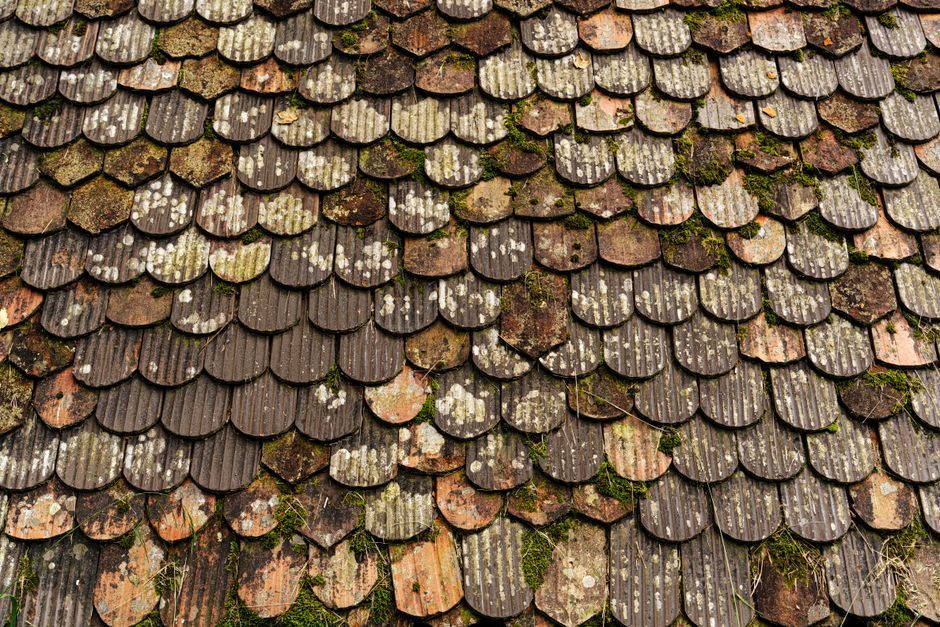
Algae usually comes first. It shows as those dark streaks and a general grubby look, and it feeds on moisture and airborne dust. Moss is the bigger problem, because it forms thick spongy clumps that hold water against your tiles.
That trapped water is the real issue. In a Scottish winter it freezes and thaws over and over, and that freeze-thaw action works away at the surface of slate and concrete tiles. Tiny cracks widen. Surfaces flake. Over years, that shortens the life of the roof.
Moss also loves to migrate. Clumps break off, wash down the slope and land in your gutters. Blocked gutters then push water where it shouldn't go, and now a roof problem has become a damp-wall problem.
4. Why the west and Highlands cop it worst
Rainfall in Scotland isn't spread evenly. The west is far wetter than the east, thanks to those Atlantic systems dumping their load as they hit high ground. Fort William and the western Highlands are among the wettest inhabited places in Britain.
Drier eastern areas like Aberdeenshire and parts of the Lothians still get plenty of moss, but the pattern is milder. If your home sits on the west coast, in Argyll, or up in the glens, expect growth to come back faster after a clean.
None of this means the east is off the hook. Edinburgh and Glasgow tenement roofs get their share, especially on shaded rear slopes hemmed in by other buildings.
5. How soft washing clears it without wrecking the roof
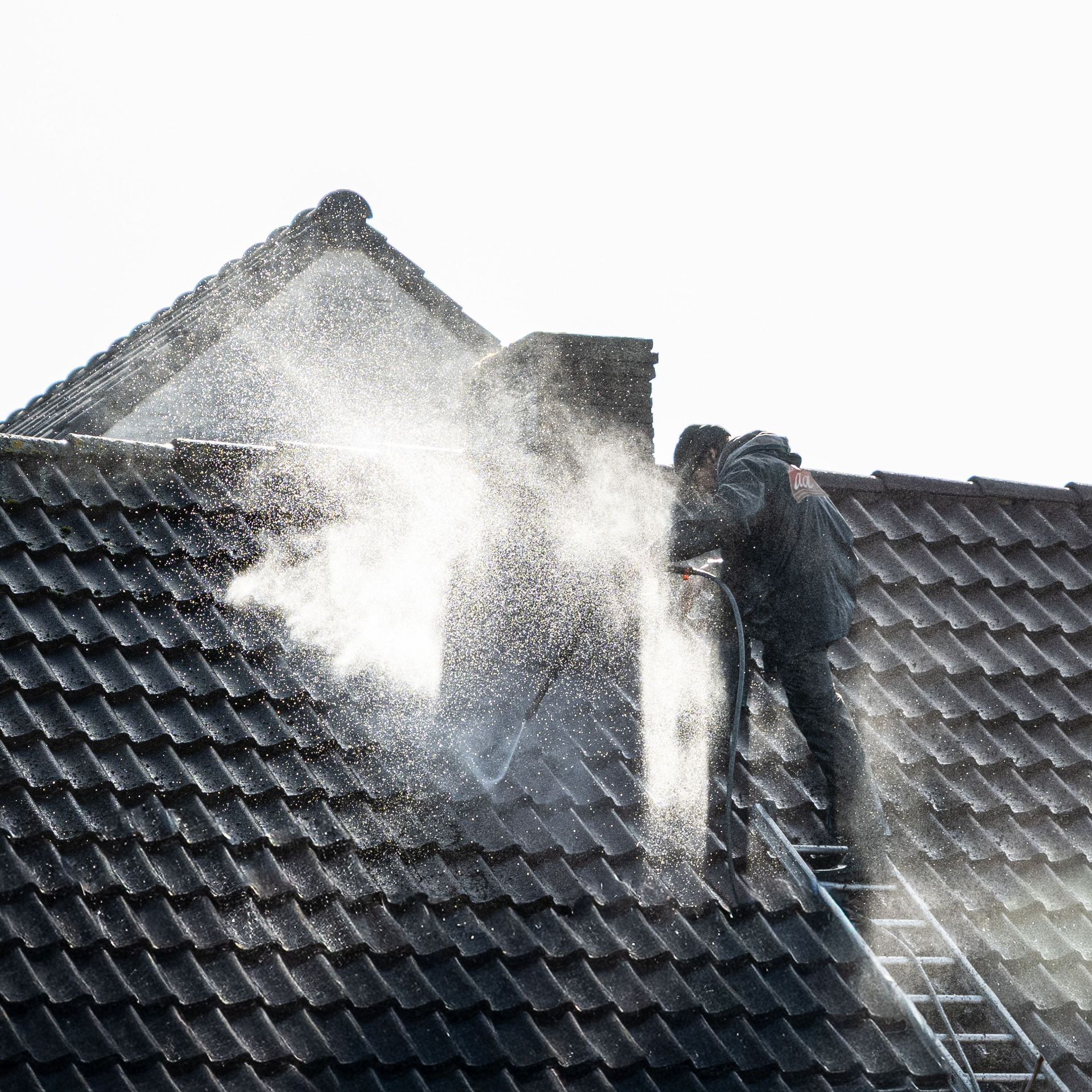
The safe way to deal with all this is soft washing. That means low-pressure water paired with a proper biocide treatment, rather than blasting the roof with a high-pressure lance.
Here's why that matters on Scottish roofs. Traditional Scottish slate and older tiles don't take kindly to high pressure. A strong jet can strip the surface, loosen slates and force water under the laps. Low pressure lifts the moss off gently, and the biocide keeps killing off spores after the visit, so regrowth slows right down.
A good clean usually runs in this order:
- Inspect first: a look over the roof and gutters to spot loose slates, cracked tiles and problem slopes before any water goes on.
- Clear the moss: thick clumps are removed by hand and with low-pressure water, working down the slope so debris heads to the gutter.
- Treat the surface: a biocide is applied to kill remaining moss, algae and spores that you can't see.
- Sort the gutters: loosened moss and muck get cleared out so water can drain properly.
- Advise on upkeep: honest guidance on how often your particular roof will need attention.
6. Keeping the green from creeping back
You can't change the Scottish weather. But you can stop moss getting a grip.
Keeping gutters clear is half the battle, because standing water and trapped debris feed growth at the roof edge. Cutting back overhanging branches lets more light and air reach the tiles, which helps them dry. And a biocide treatment during a clean buys you far longer between visits than just scraping the moss off would.
Most Scottish homes do well with a check every couple of years, though a shaded roof in a wet western spot might want looking at more often. The point is to stay ahead of it rather than waiting until moss is falling off in chunks.
Frequently Asked Questions
Why does my roof go green so quickly in Scotland?
Because the climate keeps it damp. Frequent rain, cool air and long shade give moss and algae the moisture they need to spread, especially on north-facing and tree-shaded slopes.
Is moss actually damaging my roof, or just ugly?
It's both. Moss holds water against the tiles, and in Scotland's freeze-thaw winters that trapped water works away at slate and concrete surfaces. It also blocks gutters when it washes down.
Should I just pressure wash it myself?
Better not to. High pressure can strip slate, loosen fixings and force water under the tiles. Low-pressure soft washing with a biocide is far safer for Scottish roofs.
How often should a Scottish roof be cleaned?
Every couple of years suits most homes. If you're on the wet west coast or your roof is heavily shaded, you may want it checked more often.
Does a biocide treatment really slow regrowth?
Yes. It keeps working on spores you can't see after the visit, so the moss takes much longer to come back than it would from a scrape alone.
Is the Scottish weather winning the battle with your roof?
Ben's Roof Cleaning works across Scotland, with over 15 years of experience. Get in touch or call 0131 202 2140
for a free, no-obligation quote.
Scotland's climate isn't going to dry out, so your roof needs a plan
The rain, the shade and the freeze-thaw winters all point the same way. Left alone, a Scottish roof will go green, and that green does real damage over time. A gentle soft wash and a biocide treatment, repeated every so often, keep your tiles sound and your gutters flowing without putting the roof at risk.