Traditional Scottish Roofs: Cleaning Slate and Tenement Roofs Safely
If you live under a real Scottish slate roof, you own a bit of history. You also own something that needs a gentle hand when it's time for a clean.
These roofs were built to last generations, and plenty have. But the same features that make traditional slate special also make careless cleaning a real risk.
The quick answer: Traditional Scottish slate and tenement roofs should only ever be cleaned with low-pressure soft washing, never a high-pressure jet. The slate is thick and hard but the fixings and mortar are old, so moss is lifted by hand and with gentle water, then treated with a biocide to slow regrowth.
1. What makes Scottish slate different
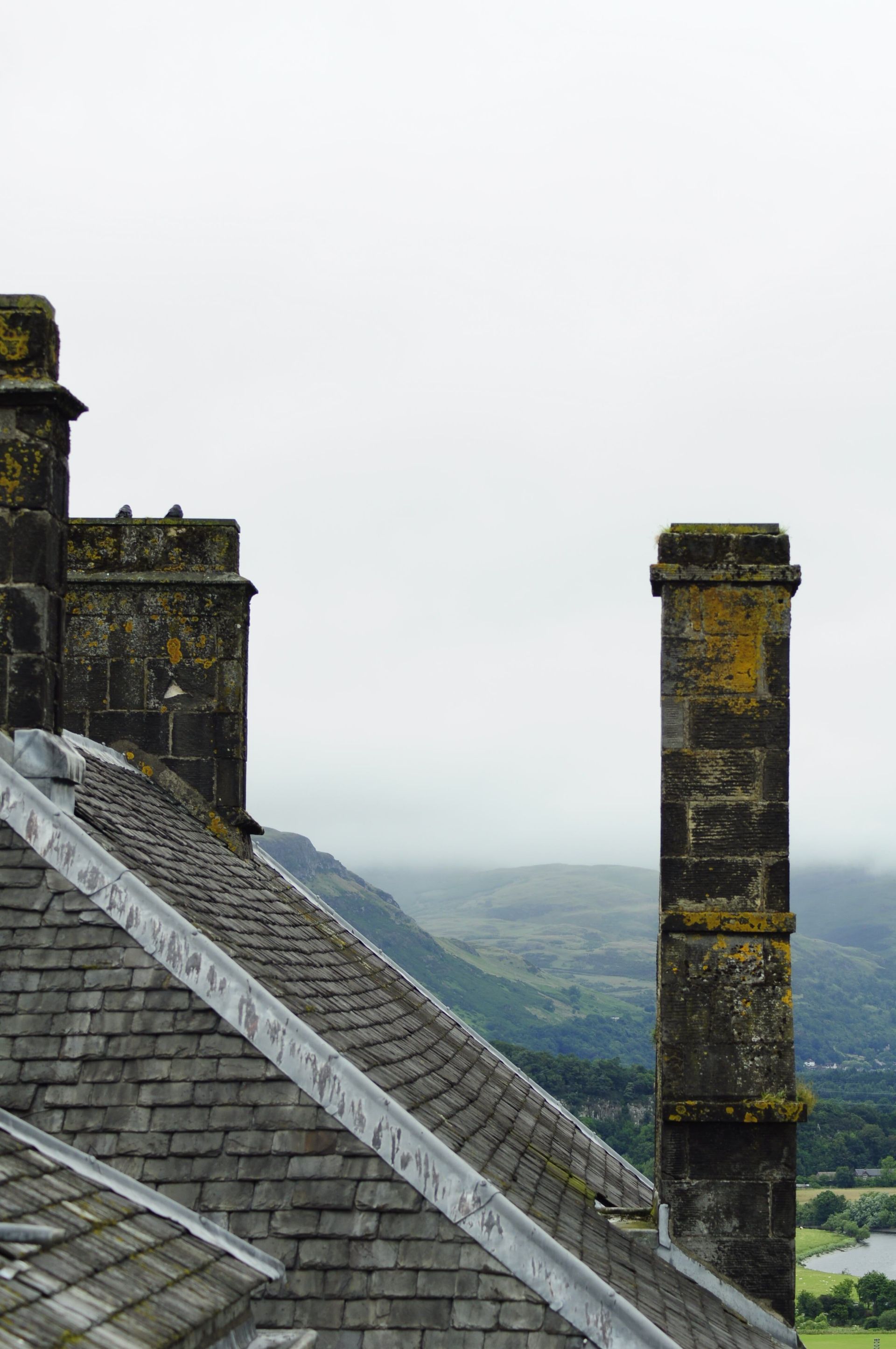
Scottish slate isn't the same as the neat blue-grey Welsh slate you see all over England. It was quarried at places like Ballachulish, Easdale and the other Slate Islands off Argyll, and it has its own character.
It tends to be thicker, harder and darker, often almost black, sometimes flecked with little glints of pyrite. The slates vary in size too, which is why traditional Scottish roofs were laid in diminishing courses, with the biggest slates at the eaves and smaller ones as you go up toward the ridge.
That look is part of the charm of Scottish streets. It also means no two slates are quite identical, so replacements need matching with care and the whole roof deserves respect when you clean it.
2. Tenement roofs and why they're a special case
Head into Glasgow or Edinburgh and you're surrounded by tenements. These tall sandstone blocks usually carry big pitched slate roofs, often shared across several flats.
Shared ownership makes them tricky. The roof over your flat might be a common responsibility, so repairs and cleaning can involve neighbours and factors. On top of that, tenement roofs are high, steep and busy with chimney stacks, valleys and lead flashings, all of which need working around.
And access is rarely simple. Many tenement roofs can only be reached safely with the right equipment, which is one more reason this isn't a job to lean a ladder against and tackle yourself.
3. Why high pressure is the wrong tool
It's tempting to think a powerful jet wash will blast years of moss away in an afternoon. On old slate, that's a mistake.
High pressure can crack slates, strip their weathered surface and blow water straight under the laps and into the roof space. On a tenement, water getting in doesn't just affect you, it can run into the flat below. The old lime mortar around ridges and chimneys is fragile too, and a strong jet can wash it out.
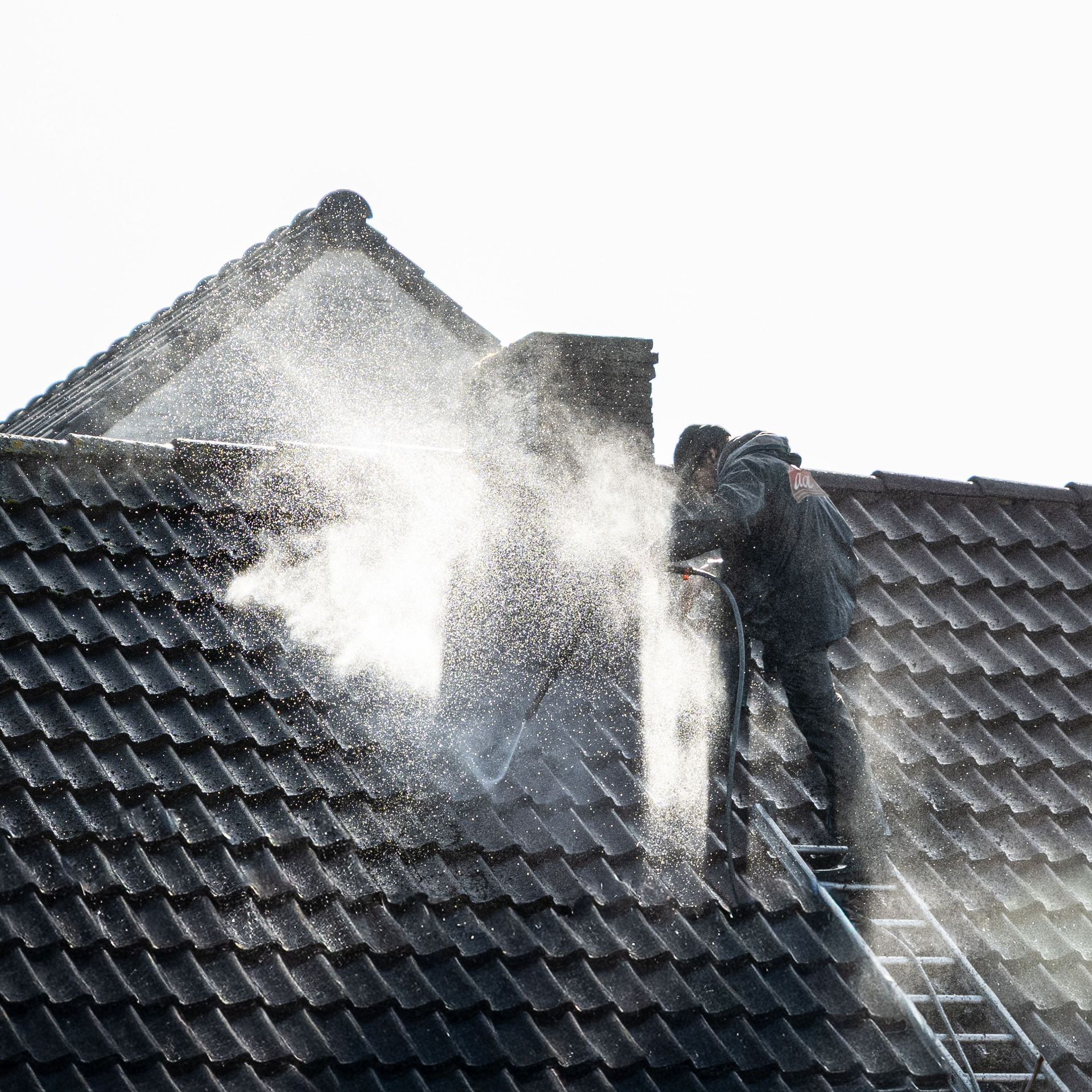
Soft washing avoids all of that. Low-pressure water lifts the moss without hammering the slate, and a biocide does the deeper work of killing off what's left.
4. How a careful slate clean actually goes
A proper job starts with looking, not spraying. The roof gets checked for slipped or cracked slates, tired mortar and any flashing that's lifting, because there's no sense washing over a fault.
Then the moss comes off gently. Thick clumps are cleared by hand and with low-pressure water, working top to bottom so debris runs down to the gutters rather than up under the slates. After that, a biocide treatment goes on to deal with algae and spores you can't see.
Here's what a considered approach looks like on a traditional roof:
- Match the method to the material: old Scottish slate gets low pressure only, never a heavy jet.
- Protect the details: lead flashings, mortar fillets and chimney stacks are worked around with care.
- Mind the neighbours: on shared tenement roofs, water control matters so nothing runs into the flat below.
- Clear the gutters too: loosened moss is taken out of the gutters so it can't cause blockages.
- Flag the repairs: any slipped slates or failing mortar spotted on the way get reported honestly.
5. The moss problem on old slate
Scottish slate is durable, but its slightly rougher, more textured surface gives moss something to cling to. Add the damp climate and you get thick growth, especially on shaded north slopes and in the valleys where debris collects.
Left there, moss holds water against the slate and into the joints. Winter frost then freezes that water, and the freeze-thaw cycle slowly prises at the surface and the fixings. Old iron nails, already weakened by a century of Scottish weather, don't need any help slipping.
Clearing moss regularly takes that pressure off. It's far cheaper to keep a slate roof clean than to start replacing slipped slates one by one.
6. Looking after a roof that could outlive you
A well-kept Scottish slate roof can last a very long time. Some have been up for well over a hundred years, re-nailed here and there but still doing their job.
Your part is simple enough. Keep the moss down, keep the gutters flowing, and get any slipped slates sorted before winter drives rain into the gap. A soft wash with a biocide every so often does most of the heavy lifting.
Treat the roof gently and it'll keep sitting quietly over your head. That's the whole point.
Frequently Asked Questions
Is Scottish slate really different from other slate?
Yes. It's typically thicker, harder and darker than Welsh slate, quarried at places like Ballachulish and the Slate Islands, and laid in diminishing courses with larger slates at the eaves.
Can you pressure wash a slate roof?
You shouldn't. High pressure can crack old slates, strip the surface and force water underneath. Low-pressure soft washing with a biocide is the safe method for traditional Scottish roofs.
Who's responsible for a tenement roof?
Often it's a shared responsibility between the flat owners, sometimes managed by a factor. It's worth checking your title deeds before arranging work on a common roof.
Will cleaning damage my old slate?
Not when it's done gently. Moss is lifted by hand and with low-pressure water, and the fragile mortar and flashings are worked around carefully.
How do I know if slates need replacing?
Look for slipped, cracked or missing slates and daylight in the loft. A proper inspection during a clean will flag anything that needs sorting.
Want your traditional slate roof cleaned without the risk?
Ben's Roof Cleaning works across Scotland, with over 15 years of experience. Get in touch or call 0131 202 2140
for a free, no-obligation quote.
Old Scottish roofs reward a gentle touch
Traditional slate and tenement roofs were built by people who knew the Scottish weather. They can keep going for generations, but only if the moss is kept down and the cleaning is done softly. Respect the material, work around the details, and a roof like that will carry on protecting your home long after the job is done.